Writings
Subscribe on Substack for email updates
The design space of general intelligence is vast, and we have no idea how much of it is safe beyond the narrow region that we humans inhabit. We are racing towards Artificial General Intelligence (AGI) without building the guardrails necessary to prevent catastrophic risk. Because the human brain is the only broadly cooperative general intelligence we know of, it is our best reference point. So why hasn't neuroscience impacted AI safety yet?
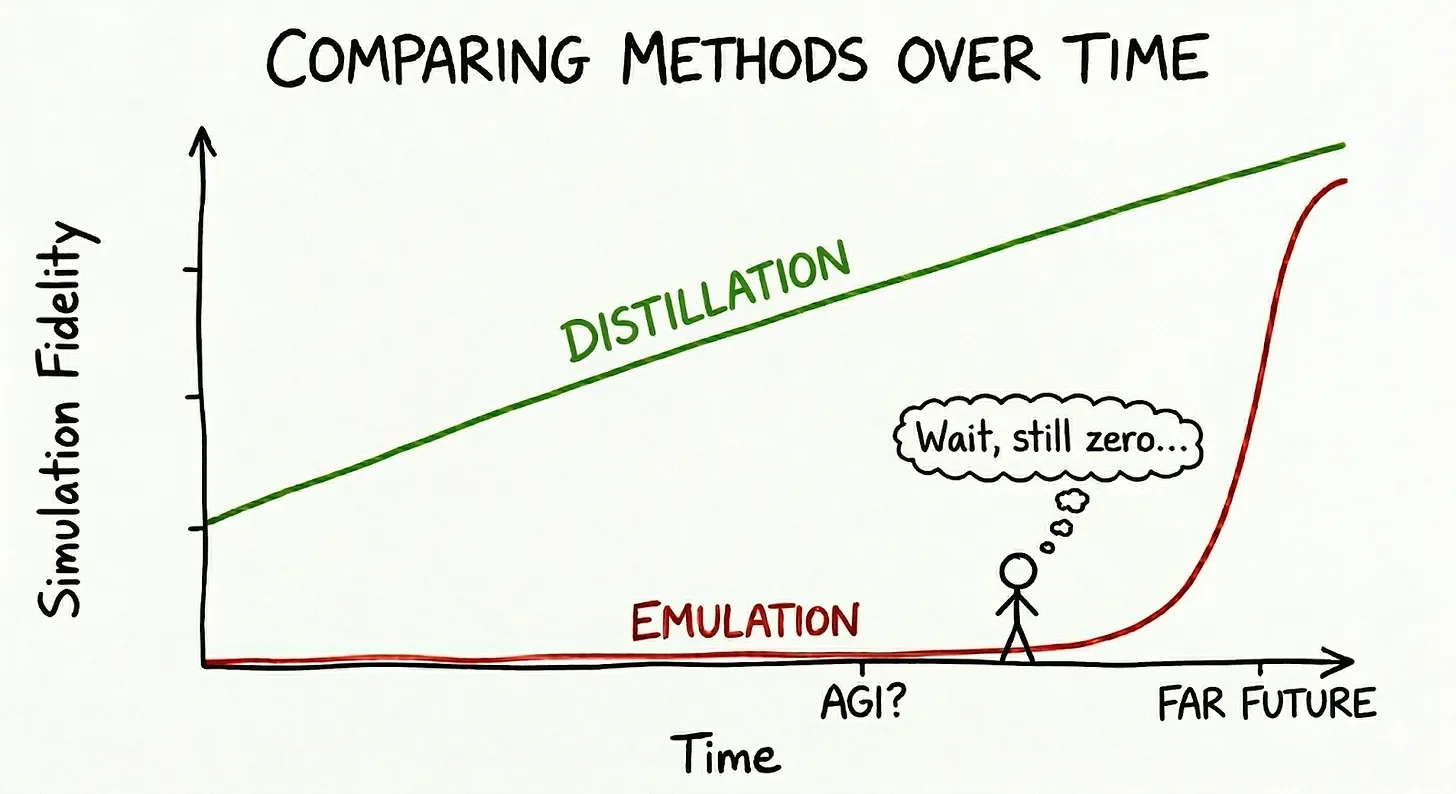
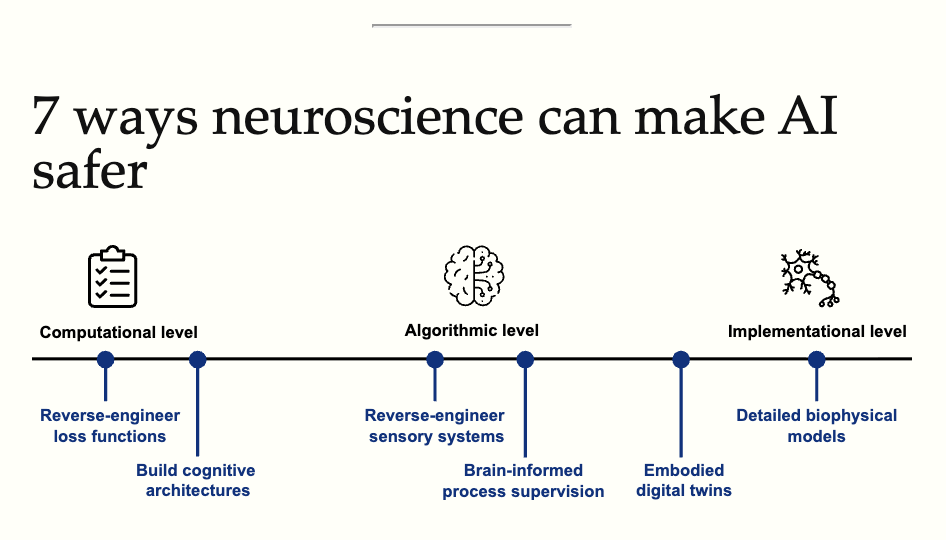
As AI systems become increasingly powerful, the need for safe AI has become more pressing. Humans are an attractive model for AI safety: as the only known agents capable of general intelligence, they perform robustly even under conditions that deviate significantly from prior experiences, explore the world safely, understand pragmatics, and can cooperate to meet their intrinsic goals. In this roadmap, we highlight and critically evaluate several paths toward AI safety inspired by neuroscience.
Creating new brain cells to replace aged, dysfunctional ones is one "moonshot" strategy to combat brain aging. Either new external cells can be transplanted, or alternatively, new cells can be created endogenously. Safely replacing aging brain cells with brand new ones could be transformative and will require intense focus and funding to realize.
By 2029, the United States will spend $3 trillion dollars every year — half its federal budget — on adults aged 65 and older. By the same year, nearly 20 million Americans will die from age-related illnesses. Yet research on the biology of aging remains overlooked. We outline initiatives which, if executed, could meaningfully accelerate the advancement of aging science and other life-extending technologies.
Congress allocates billions of dollars annually to Alzheimer's research in hopes of finding an effective prophylactic, treatment, or cure. But these massive investments have little likelihood of paying off absent a game-changing improvement in our present knowledge of biology. Funds currently earmarked for Alzheimer's research would be more productive if invested into deepening understanding of aging biology at the cell, tissue, and organ levels.